
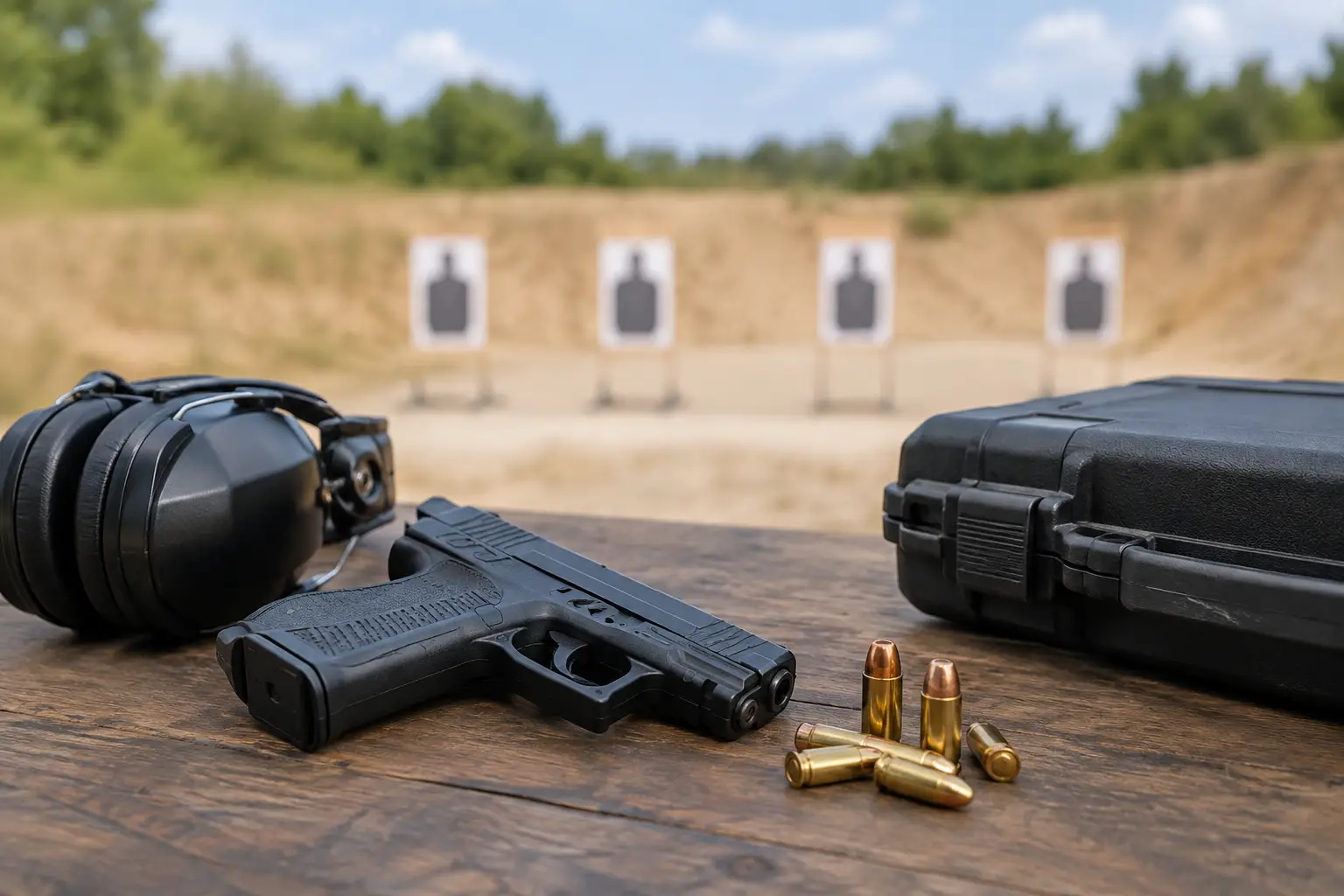
For many first-time applicants, the range is the part of the Texas LTC process that creates the most anxiety. The good news is that the firearm qualification process is not designed to surprise you or prove that you are already an expert shooter. It is a supervised proficiency demonstration built around safe gun handling, basic accuracy, and following range commands.
If you have never fired a handgun, start with instruction before the qualification. If you are already comfortable at the range, a clear understanding of the process can help you arrive prepared and complete it efficiently.
What the Texas Firearm Qualification Process Includes
Getting a Texas License to Carry involves more than shooting at a target. The full process includes the state-required classroom curriculum, a written examination, the range proficiency demonstration, the state application, and a background check. A state-approved course provider can deliver the classroom portion online when the program meets Texas requirements, but the shooting portion must be completed in person with a qualified instructor.
The order can be flexible. Some students begin their Texas Department of Public Safety application before class, while others complete training first. What matters is that your application, training certificate, fingerprints, and any requested supporting information are properly submitted within the required time frames.
A course completion certificate does not automatically issue a License to Carry. It documents that you completed the training requirement. DPS reviews eligibility and completes the licensing process.
Step 1: Complete the Required LTC Classroom Training
Texas LTC instruction covers the laws and responsibilities that go with carrying a handgun. Expect practical information on safe storage, use of force, conflict avoidance, interactions with law enforcement, prohibited places, and the responsibilities of a license holder. This is not filler. Knowing when you cannot carry and when force is not legally justified matters as much as shooting accurately.
An online LTC course is a convenient option for adults with busy schedules in Humble and nearby Houston-area communities. You can complete the classroom material at your own pace on a phone, tablet, or computer, rather than spending a full day in a classroom. You will still need to pass the written portion of the course and attend an in-person range session for the proficiency requirement.
Before enrolling, confirm that the course is state approved and that you understand what is included. Some providers offer only the online classroom portion. Others, including The Burns Group, pair online instruction with an in-person review, a short shooting lesson, and the required range demonstration.
Step 2: Get Ready for the Range Session
You do not need a tactical background, expensive equipment, or years of shooting experience. You do need to show up ready to listen, learn, and follow directions.
A typical range session begins with a safety review. Your instructor will explain the range rules, how to handle the firearm safely, how to load and unload under supervision, and what the commands mean. Keep the muzzle pointed in a safe direction, keep your finger off the trigger until you are ready to fire, and do not handle a firearm unless the instructor directs you to do so.
Bring a government-issued photo ID and any course documentation your provider asks you to bring. You will also need eye and ear protection. Ask ahead of time whether you should bring your own handgun and ammunition or whether rentals and ammunition are available. Never assume that every range or instructor provides the same equipment.
If you are borrowing or renting a handgun, give yourself time to get familiar with it before the qualification begins. A few minutes learning the controls, grip, sight picture, and trigger press can make a major difference. This is why beginner-friendly coaching is valuable: it addresses the small issues that cause new shooters to feel rushed or overwhelmed.
Step 3: Demonstrate Safe, Basic Shooting Proficiency
The Texas LTC shooting test is fired on a standard silhouette target at short, practical distances. The course of fire uses 50 rounds and is conducted at 3, 7, and 15 yards. You will shoot from a standing position and follow timed commands from the instructor.
The proficiency standard is based on a passing score of 70 percent. In practical terms, you do not need every round in the center of the target. You do need enough accurate hits in the designated scoring areas while safely completing each stage.
The timed portions can sound intimidating on paper, particularly to someone who has never taken a shooting test. In practice, the key is not speed for its own sake. Listen for the command, establish a stable grip, use your sights, press the trigger smoothly, and keep working at a controlled pace. Trying to rush usually creates more problems than it solves.
What Instructors Watch for
Your target score matters, but safe gun handling is not optional. An instructor will be watching for muzzle awareness, trigger discipline, compliance with commands, and safe loading and unloading procedures. A student who is nervous but attentive can be coached. A student who ignores safety instructions may be removed from the firing line.
This is also why a qualification should never be treated as a casual walk-in activity. Arrive early, avoid distractions, and tell the instructor if you are a new shooter or have a concern about recoil, vision, hand strength, or operating a particular handgun. Good instruction is tailored to the student in front of the instructor.
If You Do Not Pass on the First Attempt
A missed qualification is not a reason to quit. It is information. Most problems come down to an inconsistent grip, anticipation of recoil, difficulty aligning the sights, or not understanding the range commands. These are trainable skills.
Ask for feedback and schedule practice or a private lesson before retesting. A short session focused on grip, stance, sight alignment, and trigger control is often more useful than firing hundreds of rounds without a plan. The goal is to build safe, repeatable habits, not simply chase a passing score.
Step 4: Receive Your Training Certificate and Finish the Application
After successfully completing both the classroom and range portions, your instructor provides the required training completion documentation. For an online LTC course, this is commonly the LTC-101 certificate. Keep a copy for your records and submit the required information through the DPS application process as instructed.
DPS then reviews the application and conducts the required background check. Training providers do not control DPS processing times or final licensing decisions. If DPS requests additional documents or clarification, respond promptly and accurately.
Eligibility questions can be more complicated than the shooting requirement. Certain criminal history, pending charges, protective orders, substance-related issues, mental health adjudications, or other legal circumstances may affect eligibility. If you have questions about your individual legal situation, get qualified legal advice rather than relying on range conversation or social media.
Permitless Carry Does Not Make Training Optional
Texas law allows eligible people to carry a handgun without an LTC in many situations, but that does not make a License to Carry meaningless. An LTC can provide practical advantages, including reciprocity in certain other states and a clear record of completed state-approved training. Rules change, and restrictions still apply to where and how a handgun may be carried.
More importantly, carrying a firearm for personal protection requires judgment. The firearm qualification process confirms a minimum training standard. Continued practice builds the competence needed to handle a handgun safely under normal range conditions and make responsible decisions away from the range.
A Better Way to Arrive Prepared
The best preparation is simple: complete your coursework, bring the required gear, and be honest about your experience level. If you are a first-time shooter, choose a provider that will teach rather than rush you through a test. If you already shoot regularly, treat the qualification with the same discipline you bring to any range session.
A Texas LTC range day should leave you more confident, not more confused. Take the time to learn the fundamentals correctly, ask questions while you have an instructor beside you, and carry that safety-first mindset into every future trip to the range.
Leave a Reply