
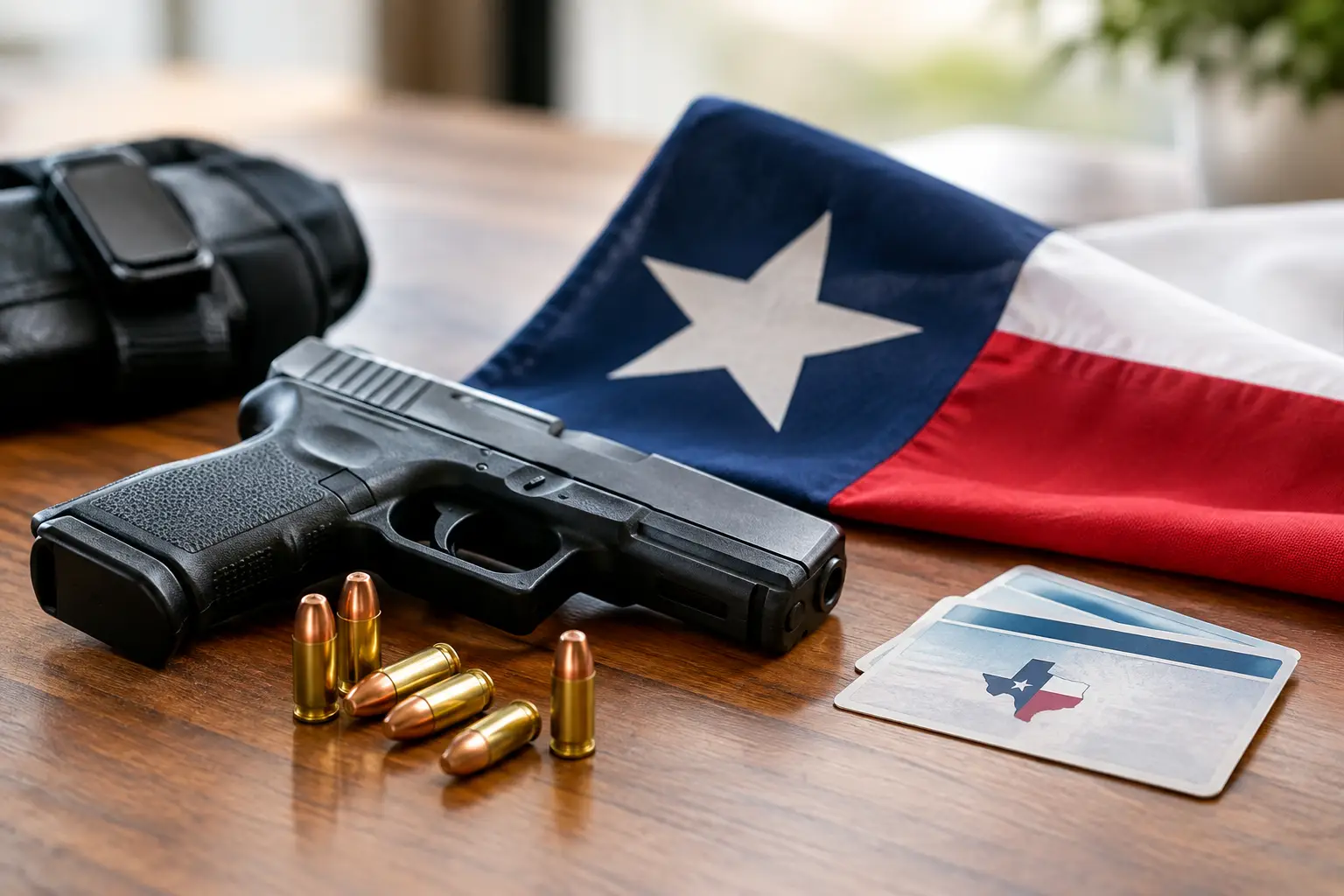
A Texas carry permit comparison should start with one practical question: do you want to simply complete a requirement, or do you want to leave the range confident you can safely handle your firearm? Those are not always the same thing. Texas allows eligible adults to carry a handgun without an LTC in many situations, but an LTC still offers real advantages for people who travel, value formal training, and want a clearer understanding of Texas carry laws.
For many Houston-area residents, the best training option is not necessarily the cheapest listing or the fastest-looking course. The right choice depends on your experience, your schedule, and whether you need patient hands-on help before completing the shooting proficiency demonstration.
What an LTC Adds to Permitless Carry
Texas permitless carry changed the decision for some gun owners, but it did not eliminate the value of a License to Carry. An LTC shows that you completed the required course and proficiency demonstration, met eligibility requirements, and applied through the State of Texas.
The most common reason people still pursue an LTC is reciprocity. Other states may recognize a Texas LTC, while permitless carry privileges generally do not travel with you. Recognition laws vary by state and can change, so responsible travelers should check the laws for every state on their route before carrying.
Training is another reason. The legal portion of an LTC course covers topics that matter when you carry in public: where handguns may be prohibited, how signage works, use-of-force principles, interactions with law enforcement, and safe storage. Carrying responsibly requires more than owning a handgun. You need to understand when you can carry, where you cannot, and how to avoid preventable legal trouble.
An LTC is not a free pass to carry anywhere. Federal law, private-property rules, restricted locations, posted notices, and local circumstances still matter. That is exactly why a course that explains the law in plain English is worth considering.
Carry Permit Comparison: Online, Classroom, and Hybrid Courses
Most Texas LTC training choices fall into three categories: a traditional in-person classroom course, an online course with a separate range qualification, or a hybrid option that combines online learning with scheduled in-person range instruction.
A traditional classroom course puts the legal instruction and range portion into one day or one block of time. That can work well for students who prefer face-to-face teaching from start to finish or who want the group setting to keep them focused. The trade-off is time. A fixed classroom schedule may be difficult for people with shift work, family obligations, or a long drive across the Houston area.
A fully online course gives you the most flexibility for the classroom portion. You can work through the material at your own pace from a phone, tablet, or computer. However, online coursework does not remove the in-person requirement. You still need to complete the proficiency demonstration with a qualified instructor at a range. Some online providers leave students to find that step on their own, which can create an extra scheduling task and an unexpected additional cost.
A hybrid course is often the most practical choice for busy students, especially first-time shooters. You complete the educational portion online, then attend a local range for a review, a short shooting lesson, and the required qualification. This format gives you flexibility without treating the range portion as an afterthought.
The Burns Group uses this approach in Humble with its $99 state-approved online LTC class. Students can finish the classroom work on their own schedule, then receive direct instructor support at the range. For a beginner, that personal attention can make the difference between arriving nervous and arriving prepared.
Compare What Is Actually Included
Course descriptions can look similar until you read the details. Before you enroll, confirm whether the advertised price includes the items you will actually need to finish.
Ask whether the course includes the online instruction, range qualification, range fees, firearm use if needed, ammunition, a shooting lesson, and the required completion documentation. A lower upfront price is not necessarily a better deal if it excludes the range portion or requires you to bring equipment you do not own.
Also ask how the provider handles beginners. A new shooter should not be expected to arrive knowing how to load, unload, aim, clear, or safely operate a handgun. The qualification itself is manageable for most students, but safe gun handling should come before scores and paperwork.
An experienced shooter may have different priorities. If you already know how to safely operate your handgun and only need the range requirement after completing classroom instruction elsewhere, a standalone qualification session can be the efficient choice. You still want an instructor who runs an organized process, verifies what you need to bring, and can answer questions about the demonstration.
The Range Qualification Is More Than a Box to Check
The Texas shooting proficiency demonstration is not an advanced tactical test. It is a basic demonstration of safe handgun handling and marksmanship. Still, it can feel intimidating if you have never fired a gun or have not practiced in years.
The best instructors explain the process before the first shot. You should know where to stand, when to load, what commands to expect, how the target will be scored, and what to do if your firearm does not fire as expected. A calm explanation is especially valuable for nervous students who are worried about making a mistake in front of others.
Look for training that includes coaching rather than rushing you through a qualification. A short lesson can address grip, stance, sight alignment, trigger control, and recoil management. Those basics improve your ability to qualify, but more importantly, they establish habits that support safe ownership after class is over.
If you do not own a handgun, ask about rental or loaner options before scheduling. If you do own one, make sure it is functioning properly and that you bring the correct ammunition. Do not wait until you are standing on the firing line to discover a magazine problem, unfamiliar controls, or an empty battery in an electronic optic.
Choose Based on Your Experience Level
A carry permit course should fit the student, not the other way around. Complete beginners usually benefit most from a hybrid class with time for individual questions and hands-on instruction. The convenience of online coursework is useful, but it should be paired with an instructor who welcomes people with no shooting background.
If you have basic range experience but are not fully confident, prioritize a provider that offers coaching during the qualification. You may not need a full private lesson, but you should have an opportunity to ask practical questions and correct simple issues before the course of fire begins.
Experienced shooters can often focus on convenience, scheduling, and whether they need a complete LTC course or range-only service. Even then, do not dismiss the legal material. Firearms skills and carry-law knowledge are separate responsibilities. Being accurate at the range does not automatically mean you understand every restriction that applies outside it.
Questions to Ask Before You Schedule
Before choosing a provider, get clear answers about the schedule, total cost, required equipment, and what happens if you need extra help. Ask whether the instructor is accessible before your range date and whether beginner coaching is included or available as a separate service.
It is also smart to ask what documentation you receive after successful completion and what your next step is with the Texas application process. Training providers can explain the course-completion side, but students remain responsible for completing their own application and meeting state eligibility requirements.
Finally, confirm the range location. A convenient local range in Humble, Kingwood, Atascocita, New Caney, Porter, or nearby communities can make it much easier to finish the process instead of putting it off after the online portion is done.
Your LTC decision should support the kind of gun owner you intend to be: informed, capable, and careful. Choose the course format that gives you enough flexibility to finish, enough instruction to learn, and enough personal support to carry with sound judgment long after the paperwork is complete.
Leave a Reply