
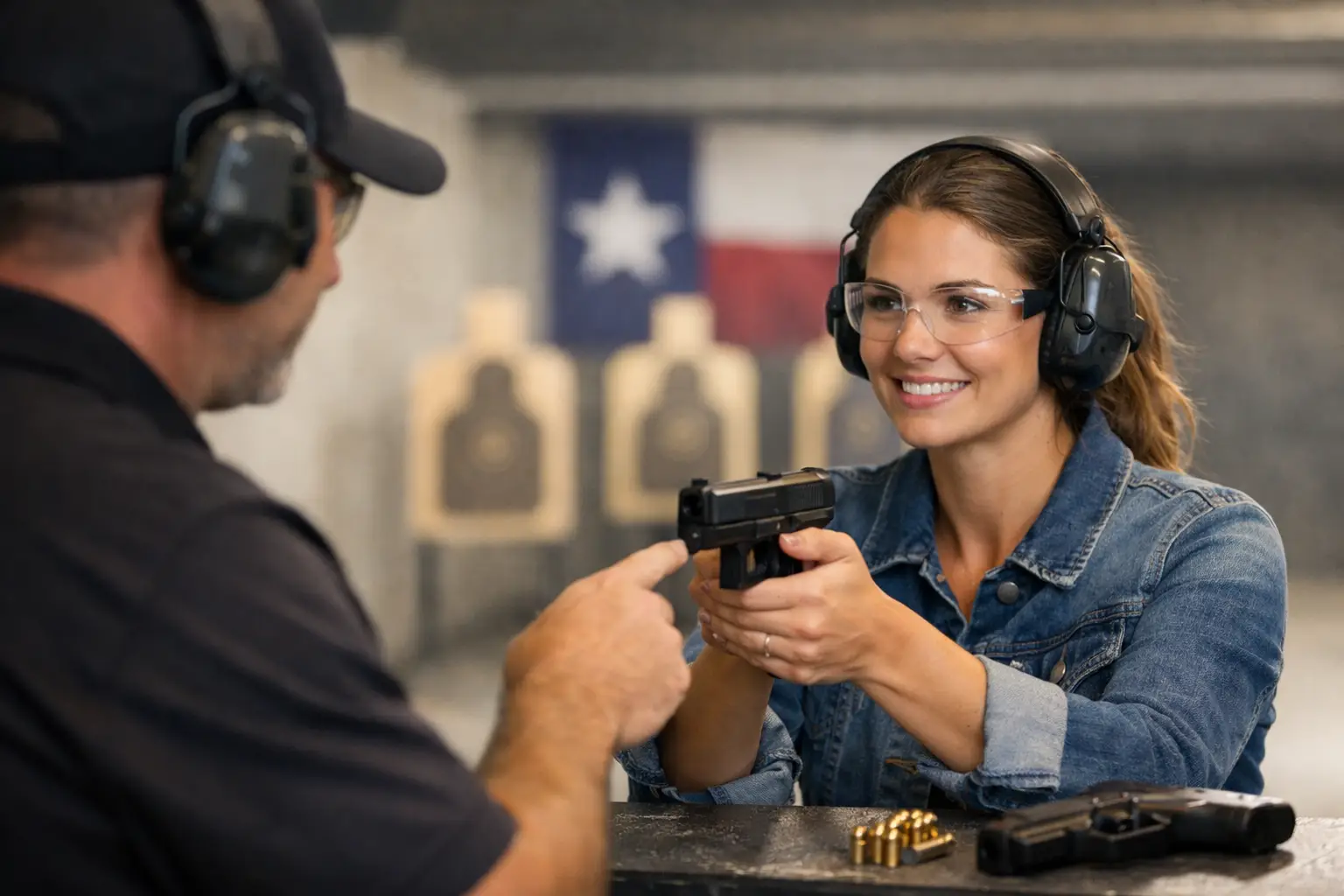
The first time you hold a handgun at a range can feel like a lot. There are safety rules to remember, controls to learn, and the pressure of wondering whether everyone else already knows what they are doing. The good news is that can beginners pass Texas LTC class is not really a question of prior shooting experience. With legitimate instruction, attention to safety, and a willingness to learn, many first-time shooters complete the course and proficiency demonstration successfully.
A Texas License to Carry course is designed to teach the required legal and safety material, then verify basic shooting proficiency. It is not intended to be an advanced tactical test. You do not need to arrive as an expert marksman. You do need to take the training seriously, listen to your instructor, and give yourself enough time to get comfortable with the firearm before qualification.
What a Texas LTC Class Actually Tests
The class has two different parts: the required course material and the handgun proficiency demonstration. They test different skills, and beginners often feel better once they understand that they are not being judged on speed, bravado, or prior experience.
The classroom portion covers topics Texas requires for an LTC course, including firearms safety, safe storage, conflict avoidance, use-of-force laws, nonviolent dispute resolution, and the responsibilities that come with carrying a handgun. There is a written exam at the end. Students need a passing score, but the exam is based on the material presented in the course. Pay attention, complete the course without rushing, and review anything that is unclear before test time.
The range portion is a basic proficiency demonstration. It evaluates whether you can handle and fire a handgun safely while following directions. The standard course of fire is 50 rounds at distances of 3, 7, and 15 yards. The required passing score is 175 out of 250 points.
That number can sound intimidating until you put it in perspective. The qualification is not built around difficult shots at extreme distance. It is a controlled exercise with clear commands and a practical scoring standard. A careful beginner who listens, uses the sights, controls the trigger, and follows safety procedures can pass.
Can Beginners Pass Texas LTC Class Without Owning a Gun?
Yes, but planning ahead matters. Owning a handgun is not the same thing as knowing how to shoot one, and not owning one does not automatically prevent you from taking training. The key question is whether you will have access to an appropriate handgun and ammunition for the range portion.
Before enrolling, ask the training provider exactly what is included and what you need to bring. Confirm the caliber requirements, range rules, ammunition policy, eye and ear protection, and whether a firearm rental or loaner option is available. Do not wait until qualification day to find out you are missing equipment.
If you are shopping for your first handgun, avoid making the LTC qualification your only reason for choosing one. A firearm should fit your hands, be manageable to operate, and be something you can safely practice with. An instructor can help you understand basic fit, recoil, sight picture, loading, unloading, and safe handling before you commit to a purchase.
The Skills Beginners Need Before the Range
You do not need advanced shooting skills, but you should understand a few fundamentals. Safe muzzle direction, keeping your finger off the trigger until you are ready to fire, and knowing when a firearm is loaded are non-negotiable. Those habits matter more than trying to shoot quickly.
You should also know how to establish a stable grip, align the sights, and press the trigger without jerking the gun. Most missed shots from new shooters are not caused by a lack of strength or poor eyesight. They come from anticipating recoil, gripping inconsistently, or moving the gun while pressing the trigger. These are normal issues, and they improve quickly with calm coaching.
Loading and unloading can make beginners nervous, especially when other people are nearby. That is exactly why professional instruction helps. A good instructor explains each step, watches your handling, and corrects small problems before they become stressful habits. Ask questions when you are unsure. Guessing around a firearm is never the right move.
At The Burns Group, the in-person portion includes a review and short shooting lesson before the proficiency demonstration. That structure gives first-time shooters a chance to practice the fundamentals with an experienced instructor instead of being expected to figure everything out on the firing line.
Why Some Beginners Struggle
Most beginners who have trouble are not incapable of passing. They usually arrive unprepared, rush through instructions, or let nerves take over. The solution is not to pretend you are more experienced than you are. Be honest about your comfort level when you register.
The most common challenge is recoil anticipation. A shooter may push the gun downward right before it fires because they expect the noise and movement. Slow, deliberate practice helps. Focus on the front sight, maintain a firm grip, and press the trigger straight to the rear. Your instructor can usually spot this quickly.
Another challenge is trying to keep up with a pace that feels unfamiliar. Qualification commands are structured, and you should follow them exactly. If you do not understand a command, speak up before acting. Range staff would rather answer a question than have a student make an unsafe assumption.
Nerves can also affect the written exam. Treat the course material as practical information, not trivia to memorize. Understanding when force may be justified, when it is better to disengage, and how to store firearms safely will help you both on the test and after you receive your LTC.
How to Prepare With No Shooting Background
The best preparation is straightforward: take the online course seriously, then schedule enough time to learn the range basics without feeling rushed. If you have never fired a handgun, a beginner lesson before your qualification can make a major difference. Even a short session can familiarize you with stance, grip, sights, trigger control, loading procedures, and range commands.
Wear comfortable clothing and closed-toe shoes to the range. Bring government-issued identification and any paperwork your provider requests. Avoid alcohol, recreational drugs, or anything else that affects judgment before training. You need to be alert, focused, and ready to follow instructions.
Do not compare yourself with experienced shooters. Their job is not to set your standard. Your goal is safe, consistent performance. A deliberate shot that lands where you intended is more useful than a fast shot that misses the target.
It also helps to arrive with the right mindset about mistakes. A missed shot is feedback, not a failure. Listen to the correction, reset your grip and stance, and take the next shot properly. Students often improve noticeably within a single range session once they stop trying to force the process.
Passing the Class Is Not the Same as Being Finished Learning
The Texas LTC course provides a required foundation, but responsible carry requires continued practice. Qualification demonstrates minimum proficiency on one course of fire. It does not replace regular range time, sound judgment, knowledge of Texas law, or the ability to avoid a confrontation whenever possible.
Texas also allows eligible adults to carry a handgun without an LTC in many circumstances, but that does not make formal training less valuable. An LTC course gives you structured instruction in safety and legal responsibilities, and a license may offer practical benefits in certain situations. Eligibility, application requirements, and carry laws can change, so confirm current Texas Department of Public Safety rules before applying or carrying.
If you are a beginner in Humble, Kingwood, Atascocita, or the surrounding Houston area, do not let a lack of experience keep you from getting trained. Start with honest questions, choose an instructor who welcomes first-time shooters, and give yourself permission to learn one safe step at a time.
Leave a Reply