Beginner handgun lesson results are rarely about firing a perfect group on the first day. The meaningful result is leaving the range with safer habits, a clear understanding of what you are doing, and the confidence to continue learning without guessing. For a first-time shooter, that is a real accomplishment.
A good lesson should feel structured, not rushed. You should know what the instructor expects, have time to ask questions, and receive direct feedback that helps you improve one step at a time. Whether your goal is personal confidence, responsible ownership, or Texas License to Carry training, a beginner lesson gives you a practical starting point.
What Beginner Handgun Lesson Results Should Look Like
Every student arrives with a different comfort level. Some have never held a handgun. Others may own one but have not had professional instruction. That means results are not measured by comparing yourself to the person in the next lane.
Instead, beginner handgun lesson results should show progress in the areas that matter most: safe firearm awareness, controlled handling, basic shooting fundamentals, and the ability to follow range commands. You should also understand what needs more practice. A responsible instructor does not tell every student they are ready for the next level just because the lesson is over.
For many beginners, the first positive result is simply replacing uncertainty with a process. You learn that safe shooting is not based on bravado or natural talent. It comes from paying attention, following established procedures, and practicing correct fundamentals consistently.
Safe Habits Come Before Better Accuracy
A new shooter may focus on the target right away. In reality, target performance comes after safe habits are established. Before a student worries about where rounds land, they need to understand how to behave safely around firearms and inside a range environment.
The four safety rules are the foundation of every responsible handgun lesson:
- Treat every firearm as if it is loaded.
- Never allow the muzzle to point at anything you are not willing to destroy.
- Keep your finger off the trigger until you are ready to fire.
- Know your target and what is beyond it.
These rules are straightforward, but applying them consistently takes focus. An instructor watches for safe handling throughout the lesson, not just during a quick explanation at the beginning. That direct supervision is especially valuable for nervous first-time shooters who need reassurance as they develop good habits.
A successful beginner does not need to look experienced. They need to demonstrate that they can listen, move carefully, ask when they are unsure, and respond correctly to coaching. Those behaviors create a safer student and a better shooter.
What You Learn About Shooting Fundamentals
Once safety expectations are clear, instruction can turn to the basic mechanics that affect consistency. A beginner handgun lesson typically addresses stance, grip, sight alignment, sight picture, trigger control, and follow-through. These are not separate tricks. They work together.
For example, a student may be aiming carefully but still see inconsistent hits because their grip changes between shots or they press the trigger abruptly. Another student may be holding the handgun too tightly in one area and not firmly enough in another. Small corrections can make a noticeable difference, but they need to be tailored to the individual.
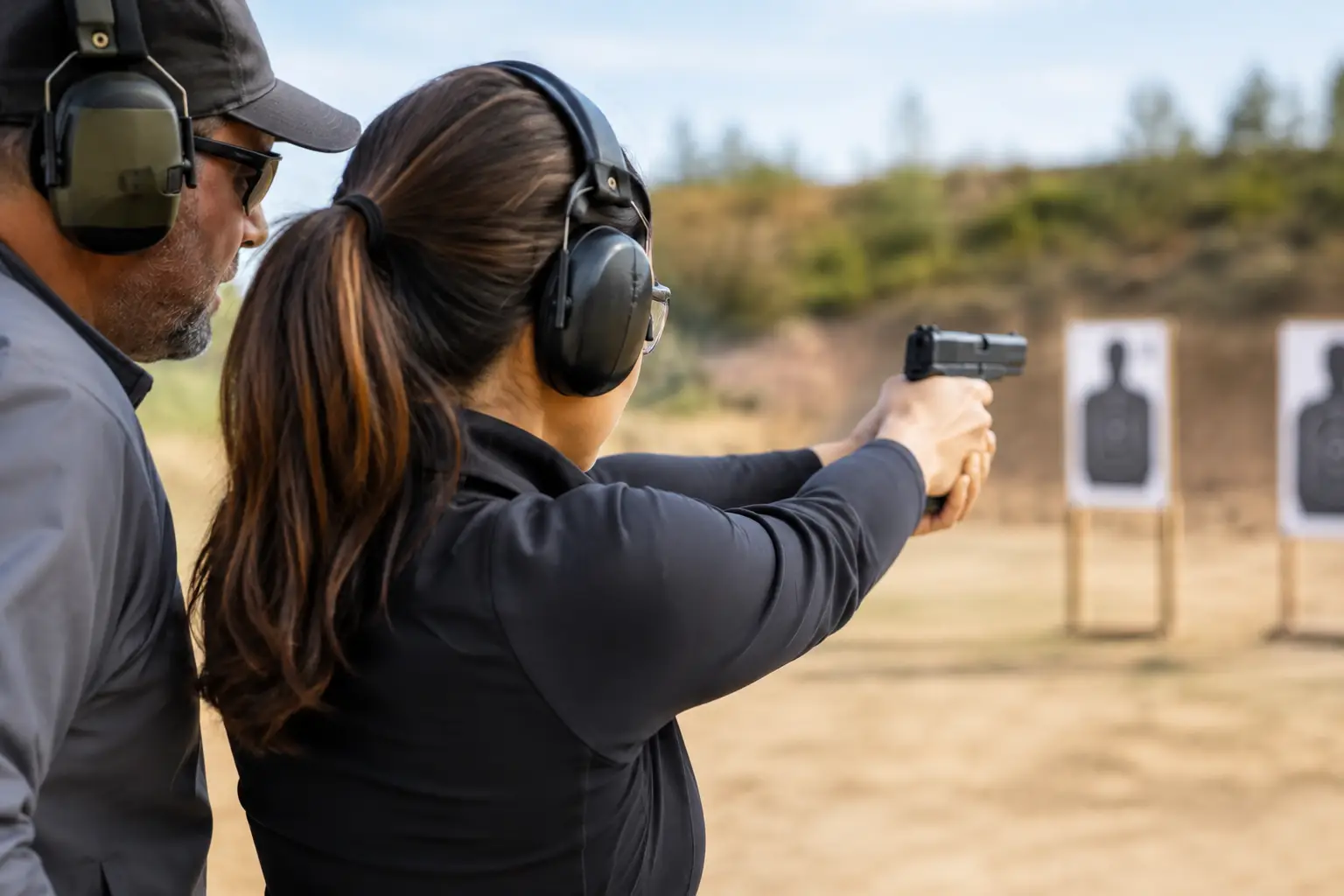
This is where hands-on coaching matters. Reading about fundamentals or watching a video can be useful, but neither can tell you whether your stance is balanced, whether you are anticipating recoil, or whether your shots are drifting in a repeatable pattern. An experienced instructor can observe what is happening and explain a correction in plain language.
Do not expect to perform every fundamental perfectly after one lesson. Expect to understand what each fundamental does and how to practice it correctly. That is a far more useful result than temporary success created by luck.
Better Target Results, With Realistic Expectations
Most beginners do see improvement on the target during a lesson. Tighter groups, fewer stray shots, and a more consistent point of impact are common results when students slow down and apply the fundamentals. Still, accuracy is not the only measure of progress.
A target tells part of the story. It may show that a student is improving their control, but it does not show whether they handled the firearm safely, followed instructions, or understood why a correction worked. Good instruction considers all of it.
Your progress may also depend on factors such as prior experience, physical comfort, vision, stress level, and the handgun being used. There is no reason to be discouraged if another student advances faster. The right goal for a first lesson is controlled, safe improvement rather than chasing a perfect score.
If you are preparing for a required range proficiency demonstration, your instructor can help you understand the standard and build the skills needed to approach it calmly. Practice should have a purpose. Randomly firing more rounds is not always the same as improving.
Confidence Should Be Earned, Not Rushed
The best kind of confidence after a beginner lesson is calm and realistic. You should feel more comfortable than when you arrived, while also recognizing that responsible handgun ownership requires continued attention and practice.
Overconfidence can cause problems. A student who has one good session may assume they no longer need instruction, while a student who struggles early may assume they will never improve. Neither conclusion is accurate. Shooting is a learned skill. Progress comes from repetition, honest feedback, and the willingness to correct mistakes.
A qualified instructor creates an environment where questions are welcome. If you are unsure about range etiquette, equipment, legal responsibilities, or a particular part of the lesson, ask. There is no prize for pretending to understand something that needs clarification.
At Burns Group, beginner instruction is designed to give students direct support instead of leaving them to figure things out alone at the range. That personal guidance can make the difference between a stressful first experience and a productive one.
How a Lesson Supports Texas LTC Training
A beginner handgun lesson and a Texas License to Carry course serve related but different purposes. The LTC classroom portion addresses required legal and safety education. The range component includes a proficiency demonstration. A shooting lesson helps bridge the gap for students who understand the classroom material but need practical coaching before they perform on the range.
For someone completing an online Texas LTC class, this can be especially helpful. The online format offers convenience, but it does not replace the value of an instructor standing beside you during your first live-fire experience. A short in-person review and lesson can answer questions, reinforce range safety, and help you arrive at the proficiency portion prepared.
Students in Humble and nearby Houston-area communities should look for training that clearly explains what is included, what equipment is needed, and what happens at the range. If you do not own a handgun or have never fired one, say so when scheduling. A professional instructor can help you prepare appropriately rather than making assumptions about your experience.
How to Get More From Your First Lesson
Come prepared to learn, not to prove anything. Wear appropriate eye and ear protection if it is not provided, follow the range dress guidance, and arrive with enough time to settle in. If you are bringing your own handgun, let the instructor know its make and model before the session when possible.
During the lesson, focus on one correction at a time. Trying to fix your stance, grip, sight picture, and trigger press all at once can feel overwhelming. A good instructor will prioritize what will make the biggest difference first.
Afterward, make a simple note of what you worked on. Maybe your next practice session should focus on a steadier grip, slower trigger control, or more consistent sight alignment. Short, deliberate practice sessions are usually more productive than trying to do too much at once.
Your first handgun lesson is not a test of whether you are naturally good at shooting. It is the first chance to build safe habits under professional guidance. Leave with questions answered, fundamentals understood, and a plan for your next step, and you will have achieved the result that matters.
Leave a Reply