
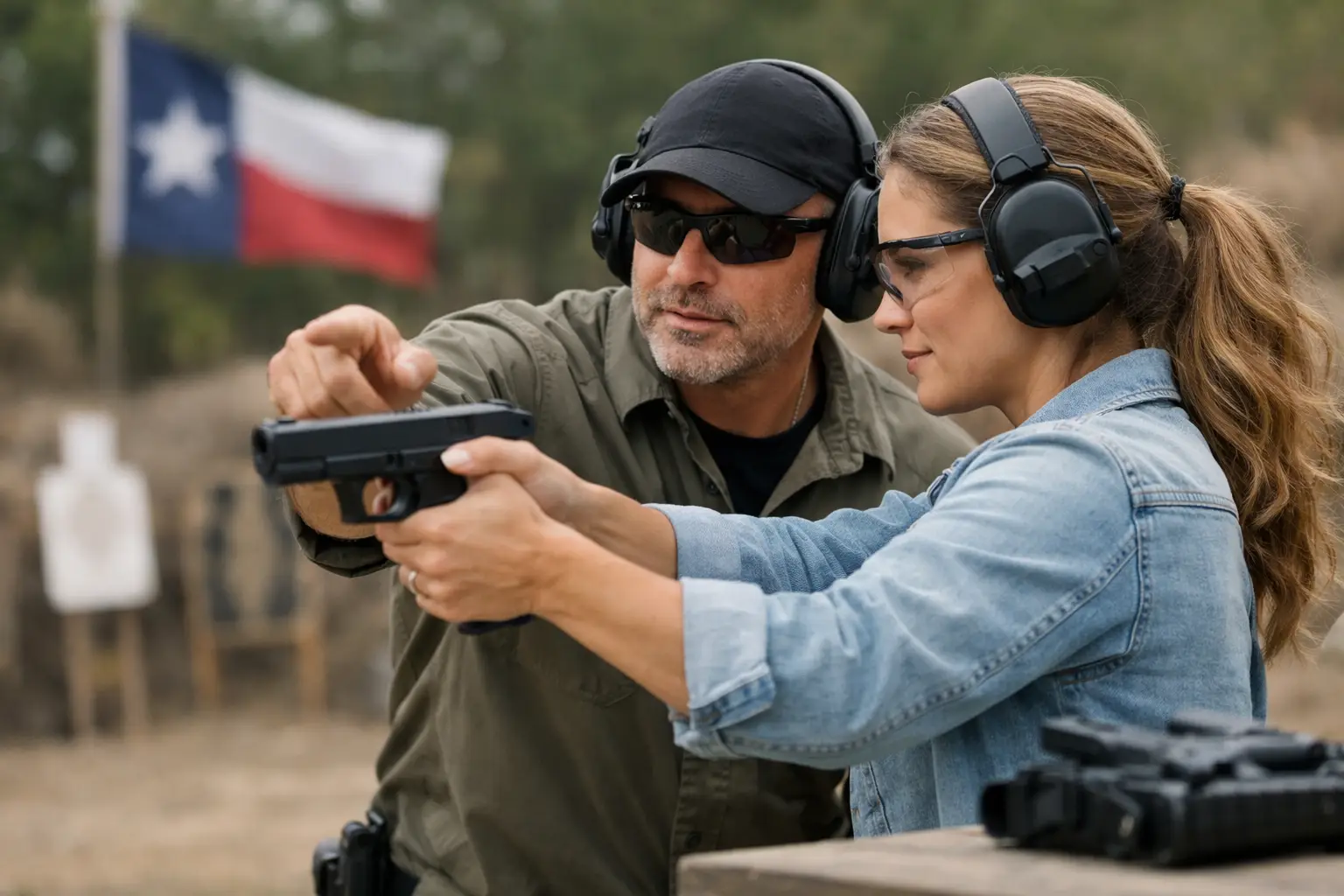
A handgun instructor can make the difference between leaving the range nervous and confused or leaving with a clear, safe foundation to build on. That matters even more if you are preparing for a Texas License to Carry, buying your first handgun, or returning to shooting after a long break. Knowing how to choose a handgun instructor starts with looking past price and picking someone who can teach safely, clearly, and at your actual skill level.
The right instructor is not necessarily the loudest person at the range, the best competitive shooter, or the person with the most tactical stories. Good instruction is about communication, judgment, safety habits, and the ability to help a student improve without rushing or intimidating them.
Start With the Training You Actually Need
Before comparing instructors, be honest about your goal. A Texas LTC class, a first-time handgun lesson, a private defensive shooting course, and an advanced skills class are not interchangeable.
If you need to meet Texas License to Carry requirements, confirm that the instructor is currently authorized to provide the state-required instruction and explain the complete process. Ask what is included in the class, how the online and in-person portions work, what happens during the range proficiency demonstration, and what paperwork you will receive. State requirements and administrative procedures can change, so a qualified instructor should give you current information instead of relying on old advice.
If you have never fired a handgun, a basic safety and fundamentals lesson may be the better first step. You need time to learn safe gun handling, loading and unloading, sight alignment, trigger control, grip, and range etiquette. A class built around experienced shooters can leave a beginner trying to keep up instead of learning correctly.
More experienced shooters should also be specific. You may need help diagnosing a low-left shot pattern, building a more consistent draw, improving accuracy, or preparing for a qualification. Look for an instructor who offers instruction beyond the minimum course and can explain how the lesson will address your goal.
How to Choose a Handgun Instructor: Check Credentials First
Credentials do not guarantee a good teacher, but they show whether an instructor has completed recognized training and is qualified for the service being offered. For Texas LTC instruction, ask whether the person is a current Texas Department of Public Safety certified License to Carry instructor. Do not assume that general firearms experience alone qualifies someone to teach the state-approved course. Wally Burns, The Burns Group is a Texas Department of Public Safety certified License to Carry instructor, a certified NRA firearms instructor and a State of Texas Licensed Security firearm instructor.
For private shooting instruction, relevant instructor certifications can include programs from established firearms training organizations, law enforcement or military instructor backgrounds, and documented continuing education. The details matter less than whether the instructor can explain what those credentials mean for your lesson.
Experience is valuable, but it should be relevant experience. Someone may be an excellent hunter, veteran, competitive shooter, or longtime gun owner and still not be prepared to teach a nervous new shooter. Ask how long they have taught, what types of students they work with, and whether beginners are a regular part of their program.
A professional instructor should be comfortable answering direct questions about qualifications. You should not have to guess who will teach you, whether the training meets the advertised requirement, or whether the instructor is insured and operating through an established business.
Look for a Teacher, Not Just a Skilled Shooter
The best handgun instructors adapt the lesson to the student in front of them. They do not use the same pace, language, or expectations for a first-time shooter and an experienced LTC applicant.
Pay attention to how the instructor describes beginners. If the message is welcoming, patient, and focused on safety, that is a good sign. If the instructor makes jokes about people who are new to firearms, treats basic questions as a waste of time, or suggests that students should already know the fundamentals, keep looking.
A good instructor gives clear, simple directions and checks for understanding. They should explain not only what to do but why it matters. For example, they should be able to explain why muzzle discipline, trigger-finger placement, and a consistent grip prevent problems before they happen.
The instructor should also correct mistakes without embarrassing you. Safe, direct correction is necessary on a range. Public humiliation is not. You are paying for professional guidance, not a test of whether you already know everything.
Ask About Safety Standards and Range Procedures
Any handgun course should begin with safety, not shooting fast. Ask how the instructor handles range safety, student supervision, firearm malfunctions, and students who bring their own handgun for the first time.
A well-run class has clear procedures before anyone fires a round. Students should understand the range rules, where firearms may be handled, when they may be loaded, what to do if they are uncertain, and how to get the instructor’s attention. The instructor should actively supervise the firing line rather than trying to coach too many students at once.
Find out whether eye and ear protection are required and whether equipment is available if you do not own it yet. Beginners often worry that they need to purchase a handgun before scheduling training. In many cases, a training provider can help you understand your options or provide appropriate equipment for the lesson. Confirm those details in advance rather than showing up unprepared.
The range environment matters, too. An indoor range can be convenient and controlled, especially during hot Texas weather, but it can also be loud and unfamiliar for first-time shooters. A good instructor prepares students for that environment and does not treat anxiety as a personal failure.
Understand Class Size, Time, and What Is Included
Price matters, but the lowest price is not always the best value. A class may appear inexpensive until you add range fees, firearm rental, ammunition, eye and ear protection, or a separate qualification appointment. Ask for the full cost before registering.
You should also know how much individual attention you will receive. A larger class can work well for the classroom portion of an LTC course, but the range portion should still give students a chance to receive personal coaching. If you are new to handguns, a private lesson or small-group session may be worth the added cost because you can ask questions and work at a manageable pace.
Ask practical questions before you commit: How long will the class take? What do I need to bring? Can I use my own handgun? What calibers are allowed? Is ammunition included? What happens if I need additional range coaching? Is there a rescheduling policy?
Clear answers are a sign of a business that respects your time. Vague answers, surprise costs, or pressure to book immediately are not.
Read Reviews for Specific Details
Reviews can help, but do not rely only on star ratings. Look for comments that mention the instructor’s patience, safety focus, organization, communication, and ability to work with beginners. A review saying, “Great class,” is positive but limited. A review explaining that the instructor helped a first-time shooter feel comfortable handling a firearm tells you much more.
Also look at how the business responds when someone has a concern. Professional responses do not need to agree with every complaint, but they should be respectful and focused on resolving legitimate issues.
Word of mouth can be useful when it comes from someone with similar needs. A friend who is an experienced shooter may love a fast-paced advanced course that would be a poor fit for a new gun owner. Ask people whether the instructor would be good for your level, not just whether they personally enjoyed the class.
Watch for Red Flags Before You Register
Some warning signs are easy to spot. Be cautious if an instructor dismisses safety questions, makes unrealistic promises, encourages careless gun handling, or treats legal carry as a substitute for judgment and avoidance. Responsible instruction includes safe storage, situational awareness, legal responsibilities, and the serious consequences of using force.
Be equally cautious of an instructor who promises to make you an expert in a few hours. A class can give you a strong start, but handgun skill is built through correct practice over time. Honest instructors set realistic expectations and recommend additional training when it would help.
Avoid programs that seem more interested in selling gear than teaching. Equipment can matter, but a beginner does not need to be pressured into buying a particular handgun, holster, optic, or accessory before understanding the fundamentals. The firearm must fit your hands, your intended use, and your ability to operate it safely.
Choose Local Convenience Without Sacrificing Quality
For Houston-area students, a local instructor can make training easier to complete and easier to continue. A convenient location in or near Humble, Kingwood, Atascocita, New Caney, Porter, or nearby communities means you are more likely to schedule the in-person range portion and return for follow-up coaching.
Convenience should not be the only factor, but it is a legitimate one. An online LTC classroom option paired with a scheduled in-person review and range session can work well for adults balancing work, family, and other commitments. Just make sure the program still provides meaningful instructor access and hands-on supervision where it counts.
The Burns Group, for example, combines a state-approved online Texas LTC class with an in-person review, shooting lesson, and proficiency demonstration at an indoor range in Humble. That structure can be especially useful for students who want flexibility without being left alone for the range portion.
Your first instructor does not have to be your last, but they should give you a safe start and enough confidence to keep learning. Choose the person who answers your questions plainly, respects your pace, and treats responsible gun handling as a skill that deserves patience and practice.
Wally Burns, The burns Group, 832-414-7154 wallaceburns2@gmail.com
Leave a Reply