
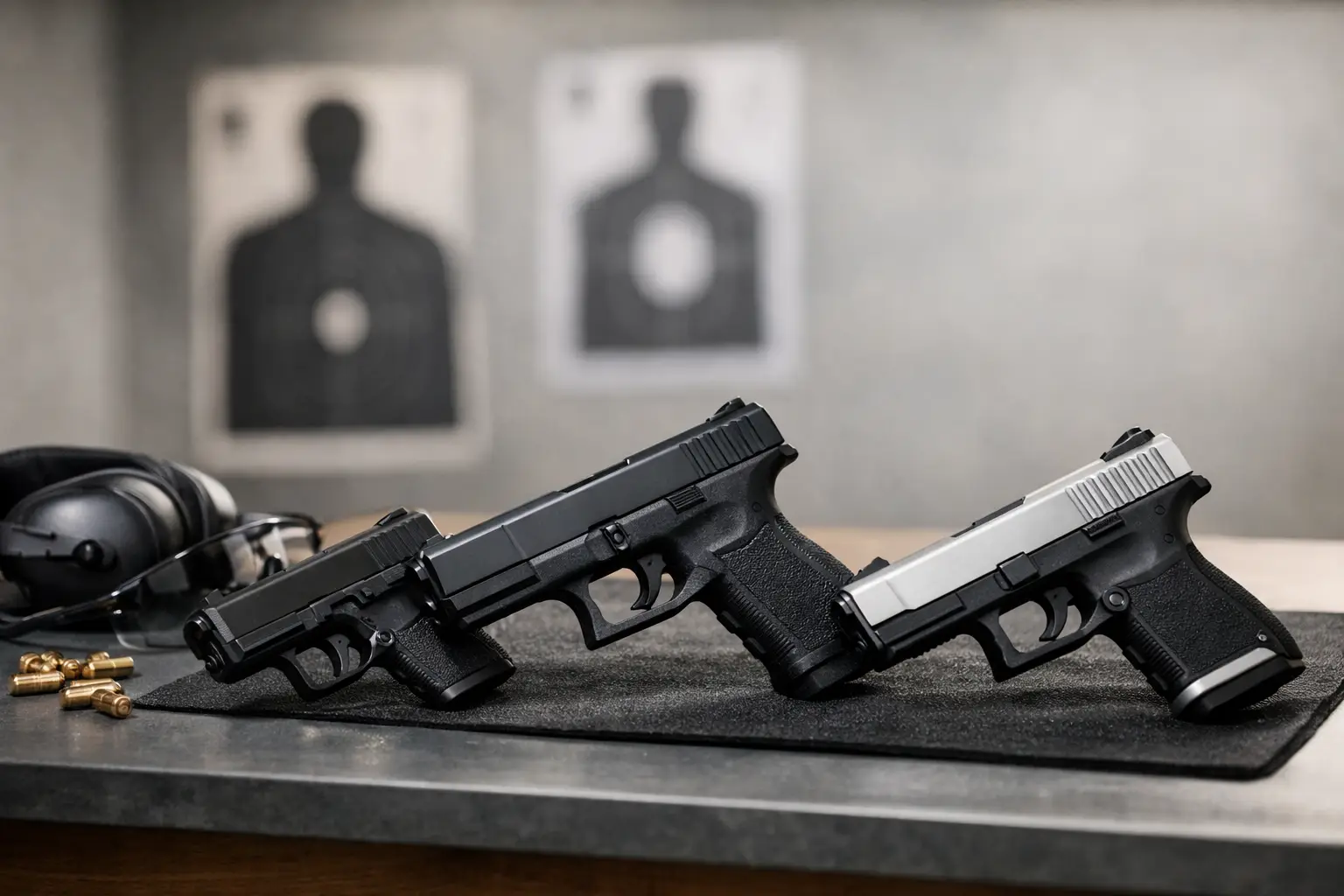
A first handgun should not be chosen from a movie scene, a friend’s recommendation, or whichever model has the loudest reputation. When people ask, “what handgun is best for beginners,” the honest answer is that the best choice is the one you can handle safely, operate confidently, and shoot accurately with proper instruction.
For many new shooters, a reliable 9mm semi-automatic pistol is a practical starting point. It is widely available, commonly used for training and personal protection, and offers manageable recoil for many adults. But “commonly recommended” does not mean “automatically right for you.” Hand size, grip strength, comfort with recoil, eyesight, and intended use all matter.
The right process is simple: learn safe handling first, try suitable options under supervision, and make a purchase only after you know what fits. A handgun is a serious responsibility. Starting with a smart, controlled decision will serve you far better than rushing to buy a popular model.
What Handgun Is Best for Beginners? Focus on Fit First
A handgun that does not fit your hands is difficult to control, no matter how highly rated it may be. Before considering brand names, hold unloaded examples with an instructor or knowledgeable range staff member present. Your hand should reach the trigger naturally without forcing your grip or stretching your finger. You should also be able to reach the magazine release and slide stop without losing control of the firearm.
Grip size matters more than many first-time buyers expect. A very small pistol may look less intimidating, but smaller handguns often produce more felt recoil and leave less gripping surface. That can make them harder, not easier, for beginners to shoot well. A compact or full-size handgun is usually more comfortable to learn on because it offers a fuller grip, a longer sight radius, and more weight to help reduce recoil.
Your goal is not to find the smallest gun you can carry. Your goal is to find one you can safely load, unload, hold, aim, and fire with control. Concealed carry considerations can come later, after you build a sound foundation.
Caliber: Why 9mm Is Often a Practical Starting Point
For most adult beginners, 9mm is a sensible place to start. Ammunition is readily available, many dependable handguns are chambered in 9mm, and the recoil is manageable for a wide range of shooters when the firearm fits correctly. It is also a common caliber for range practice and defensive handgun training.
That said, 9mm is not the only option. A .22 LR pistol has very light recoil and can be an excellent learning tool for a nervous first-time shooter, someone with limited hand strength, or anyone who wants to focus closely on sight alignment and trigger control. The trade-off is that a .22 LR pistol does not feel or operate exactly like every centerfire defensive handgun.
Some people consider .380 ACP because it is often available in smaller pistols. It can be a reasonable choice for certain shooters, but do not assume it will be easier to shoot. Small .380 pistols can be snappy, difficult to rack, and harder to grip than a larger 9mm. This is one reason hands-on range time matters more than a caliber chart.
Start With Simple, Reliable Controls
Beginners generally benefit from a modern handgun with straightforward controls and a consistent trigger pull. Many new shooters find striker-fired pistols easier to learn because the trigger pull is similar from shot to shot and the controls are uncomplicated. Others prefer hammer-fired pistols or revolvers. There is no universal answer, but there should be no confusion about how your firearm works.
If you are considering a semi-automatic pistol, make sure you can safely operate the slide. This is a major consideration, especially for shooters with arthritis, hand injuries, or lower grip strength. Technique helps considerably, and an instructor can show you how to use leverage and body position rather than trying to muscle the slide backward with your fingers.
Do not select a handgun solely because it has a manual safety, or reject one solely because it does not. A manual safety is not a substitute for safe gun handling, a quality holster, secure storage, and consistent training. If you choose a firearm with a manual safety, you must practice using it correctly every time. If you choose one without it, you must understand its built-in safety features and keep your trigger finger off the trigger until you are ready to fire.
Rent Before You Buy
The best way to avoid buyer’s remorse is to shoot several suitable handguns before purchasing one. A range rental gives you useful information that cannot be gathered by reading specifications online. You will learn how the grip feels after several magazines, whether the sights are easy for you to see, how the trigger feels, and how well you manage recoil.
When comparing handguns, do not judge yourself by speed. A beginner should be looking for safe operation and repeatable control. Can you keep the muzzle in a safe direction while loading and unloading? Can you maintain a solid grip? Can you keep your shots in a reasonable group at a close training distance? Can you recognize when something feels wrong and stop to ask for help?
Those questions matter much more than whether a certain model is considered trendy or tactical. A good training handgun should encourage confidence, not create frustration.
Features That Help New Shooters Learn
A beginner-friendly handgun usually has clear, easy-to-see sights, a grip that fills the hand without feeling oversized, and a trigger you can press smoothly without disturbing the sights. Reliable magazines and a manageable magazine-loading process are also worth considering. Magazine loaders can make practice more comfortable for people whose hands tire easily.
Avoid making your first purchase based on aftermarket accessories. Optics, lights, extended magazines, custom triggers, and other upgrades have their place, but they can distract from the fundamentals. Learn to safely handle and accurately fire a basic, reliable handgun first. Once you understand your needs, you can decide whether accessories actually solve a problem for you.
Storage should be part of the purchase decision from day one. A handgun requires secure storage that prevents access by children, unauthorized adults, or visitors. Think about where the firearm will be stored, who lives in your home, and how it will be secured when it is not under your direct control.
Do Not Confuse a Carry Gun With a Learning Gun
Many people shopping for their first handgun are also thinking about getting a Texas License to Carry. That is understandable, but a carry gun and an ideal learning gun are not always the same thing.
A compact or full-size pistol may be easier to learn on, while a smaller handgun may be easier to conceal. The smaller firearm often requires more discipline because it has a shorter grip, sharper recoil, and less forgiving sights. There is nothing wrong with eventually owning a smaller carry pistol, but beginners should not feel pressured to begin with the most difficult platform.
Texas law and carry requirements can change, so responsible gun owners should stay current on applicable laws and seek qualified instruction. Training also gives you the opportunity to ask practical questions about safe transport, storage, range rules, and lawful carry decisions without relying on internet opinions.
Professional Instruction Makes the Choice Easier
A new shooter does not need prior experience to take a lesson. In fact, getting instruction before purchasing a handgun can save money and prevent bad habits. A qualified instructor can help you establish a safe grip, stance, sight picture, and trigger press while also helping you try firearms that are appropriate for your experience level.
At The Burns Group, first-time shooters receive patient, hands-on guidance during the in-person range portion of their training. The goal is not to rush anyone through a qualification. It is to help each student understand safe firearms handling and build the confidence needed to make responsible choices.
The handgun you choose should feel like a tool you understand, not an object you hope to figure out later. Schedule time with a qualified instructor, try a few reliable options, and let safe, controlled range experience guide your decision.
Leave a Reply