
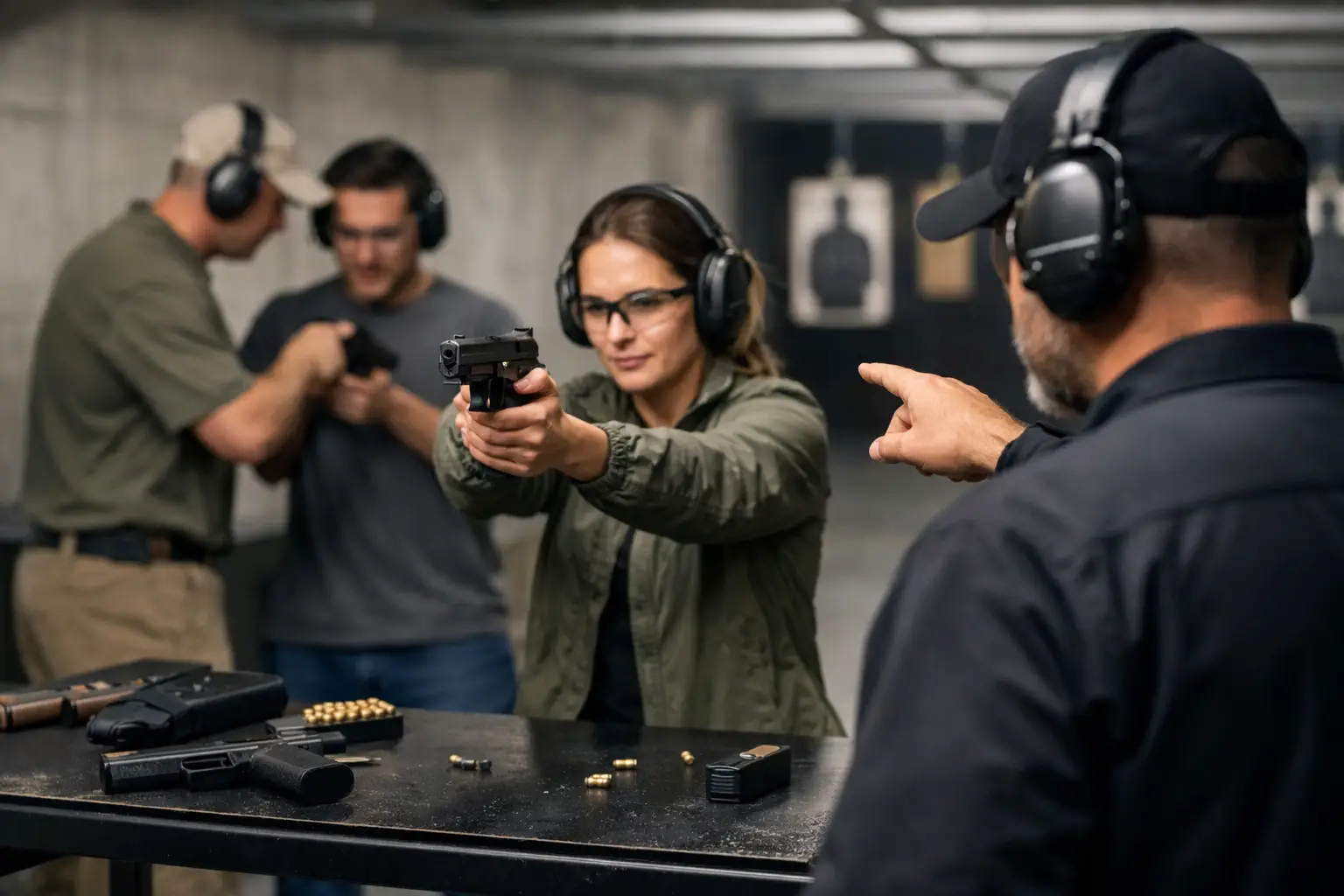
Your Range Time Is More Than a Test
For many first-time students, the range portion is the part that causes the most concern. An LTC class with range time is designed to remove that uncertainty. You do not simply show up, fire a few rounds, and hope for the best. The right course connects the required Texas License to Carry classroom material with hands-on safety instruction, practical coaching, and the state-required proficiency demonstration.
That matters whether you already own a handgun or have never held one. The classroom portion teaches the law and responsibilities that come with carrying. The range portion gives you the chance to apply safe firearm handling under an instructor’s supervision. Both parts are necessary for a complete Texas LTC course.
For students around Humble, Kingwood, Atascocita, New Caney, and the greater Houston area, a class that combines online coursework with local range time can make the process far more manageable. You can complete the academic portion on your schedule, then come in prepared for direct instruction and qualification.
What an LTC Class With Range Time Includes
A Texas-approved LTC course has two main components: the classroom instruction and the shooting proficiency demonstration. Online classes cover the classroom requirement through state-approved material. This generally includes Texas laws relating to carrying a handgun, use of force and deadly force, handgun safety, conflict avoidance, and the legal responsibilities of a license holder.
The range appointment is where an instructor verifies that you can safely handle and fire a handgun. It is not a substitute for the classroom course, and the classroom course alone does not complete your LTC training. Students need both components before receiving the paperwork needed for their Texas LTC application.
At Burns Group, the process is built around that practical reality. Students complete the approved online class at their own pace, then attend an in-person session for a review, a short shooting lesson, and the required proficiency demonstration at an indoor range. This format is especially useful for adults balancing work, family, and other responsibilities.
What Happens Before You Shoot
The range session begins with safety, not firing. Your instructor will review the range rules, explain how the session will work, and make sure you understand the commands used on the firing line. If you are a newer shooter, this is where you can ask direct questions without feeling rushed.
Expect to cover the basics: how to keep the muzzle pointed in a safe direction, how to keep your finger off the trigger until you are ready to shoot, how to load and unload safely, and what to do if a firearm does not fire as expected. Safe gun handling is evaluated throughout the session, not only during the scored course of fire.
Wally Burns, The Burns Group can also help you establish a stable shooting stance, proper grip, sight alignment, and trigger control before qualification begins. These fundamentals are not complicated, but they make a real difference. Many misses come from gripping too tightly, anticipating recoil, or pressing the trigger abruptly. A few minutes of proper coaching can correct those issues.
The Texas LTC Shooting Qualification
The Texas LTC proficiency demonstration is a standard, supervised course of fire. Students fire 50 rounds at a B-27 silhouette target from distances of 3, 7, and 15 yards. The target is scored for a possible 250 points, and a passing score is 70 percent, or 175 points.
The qualification is meant to show basic handgun proficiency, not advanced defensive shooting skills. You are not required to shoot quickly, draw from a holster, or perform complicated drills. The focus is safe handling and the ability to place rounds on target at practical distances.
Students use a handgun chambered in .22 caliber or larger. A smaller-caliber handgun can be a reasonable choice for qualification if it is reliable, fits your hands, and allows you to shoot accurately. However, choosing a firearm only because it has less recoil is not always the best long-term answer. If you plan to carry a different handgun, getting training with that firearm later is a smart next step.
Do You Need Shooting Experience?
No. A good LTC class with range time should welcome complete beginners. The purpose of the in-person instruction is to make sure students understand what they are doing before the scored qualification begins.
That said, new shooters should be realistic about their needs. The LTC qualification is achievable for most people, but the range session is not the ideal place to learn every firearm fundamental from scratch. If you are nervous about recoil, unsure how to load a magazine, or have never fired a handgun, a beginner shooting lesson before your qualification can give you more time to learn without the pressure of a scheduled test.
Experienced shooters benefit from coaching too. Someone who has spent years shooting casually may still have habits that affect accuracy or safety. A qualified instructor can identify small problems with grip, trigger press, or visual focus that are hard to notice on your own.
What to Bring to Your Range Appointment
Your instructor or range will provide specific instructions when you schedule, so follow those directions first. In general, students should bring a valid government-issued photo ID, any required course-completion information, eye protection, ear protection, a suitable handgun, and enough ammunition for the qualification plus a small margin for practice. However, with Wally you only need your ID because Wally can furnish everything else.
Do not assume every range has the same rental, ammunition, or equipment policies. Some indoor ranges require ammunition purchased on-site when using a rental firearm. Others may have restrictions on certain ammunition types. Confirm the details before arrival so you are not delayed on the day of your appointment. The Burns Group will furnish everything needed for your LTC test.
Wear comfortable clothing and closed-toe shoes. Avoid low-cut tops that can allow hot brass to fall inside clothing. If you use prescription glasses, they may serve as eye protection if they provide adequate coverage, but dedicated safety glasses are often more comfortable at the range.
Arrive early enough to settle in, complete any range paperwork, and listen to the safety briefing. Rushing into a qualification appointment is unnecessary stress, especially for a first-time shooter.
Online Class Convenience, In-Person Accountability
The online portion of an LTC course gives students flexibility. You can work through the required material from a phone, tablet, or computer rather than trying to fit a full classroom session into one day. You can pause, review sections, and complete the work when it fits your schedule.
But carrying a handgun is a serious responsibility, which is why the in-person component still matters. A video course cannot watch your muzzle direction, correct your grip, or make sure you understand a cease-fire command. Range time provides the personal instruction and accountability that a responsible LTC process requires.
This combination is often the best fit for busy Texas residents: complete the legal and educational material online, then receive focused help from an instructor when it is time to handle and fire a handgun.
Passing the Qualification Is Only One Step
Passing the range demonstration is an accomplishment, but it should not be mistaken for the end of your training. The Texas LTC qualification establishes a minimum standard. Carrying responsibly requires continuing attention to safety, judgment, firearm storage, and the laws that govern where and when you may carry.
Texas allows eligible adults to carry a handgun without an LTC in many circumstances, but obtaining a license can still provide important benefits. An LTC shows that you completed the state-approved course and passed the proficiency requirement. It can also affect reciprocity when traveling and may be recognized in states that honor Texas licenses. Laws change, so responsible gun owners should stay current on Texas rules and the laws of any state they visit.
After your class and proficiency demonstration, follow the current Texas Department of Public Safety application process carefully. Your instructor can explain the course documentation, but eligibility decisions and license issuance are handled by the state.
Give Yourself Time to Learn
The best way to approach range time is with a calm, teachable mindset. Ask questions. Listen to the safety commands. Slow down when loading and firing. Accuracy improves when you stop trying to rush through each shot.
You do not need to arrive as an expert to complete your LTC training. You do need to take safety seriously and choose instruction that gives you real support at the range. A little preparation and hands-on coaching can turn a stressful first range visit into the beginning of lasting confidence and responsible carry habits.
Leave a Reply